 how-to
How to Find Your Dream Home in Las Vegas
Table of Contents
- Step 1: Assess Your Needs and Define Your Dream Home
- Step 2: Set Your Home-Buying Budget and Get Preapproved
- Step 3: Create a Home-Buying Checklist and Research the Market
- Step 4: Explore Las Vegas Neighborhoods for Homebuyers
- Step 5: Evaluate New Construction vs. Resale Homes
- Step 6: How to Choose a Real Estate Agent in Las Vegas
- Your Complete Las Vegas Home-Buying Guide
- Frequently Asked Questions
Last Updated: October 21, 2026
Step 1: Assess Your Needs and Define Your Dream Home
To find dream home Las Vegas, start with honest self-reflection.
List non-negotiables first: bedrooms, a yard, proximity to work. Then list preferences, nice but not deal-breakers, like a pool.
Next, weigh lifestyle: urban versus quiet, walkability versus privacy. Your answers will eliminate entire neighborhoods.
Consider your timeline too, urgency affects your negotiating position. At Reside, LLC, we understand the importance of clarifying priorities upfront.
Finally, assess your comfort with maintenance. New construction needs less upkeep; older homes may need repairs.
Step 2: Set Your Home-Buying Budget and Get Preapproved
Your budget determines your search range and your confidence in offers. Guessing wastes time.
Get preapproved for a mortgage.
During preapproval, ask your lender about:
- Interest rate options and how they affect your monthly payment
- Down payment requirements
- Closing costs and what's included
- Loan programs available to first-time buyers
Compare rates and terms from at least two lenders. A 0.5% difference in interest rate can save you thousands over the life of the loan.
Remember that your preapproval amount is the maximum you can borrow, not what you should spend. Leave room for emergencies and maintenance.
Step 3: Create a Home-Buying Checklist and Research the Market
A structured approach prevents you from overlooking critical details. Create a home-buying checklist covering property features and neighborhood factors.
Start by researching recent home sales in your target areas. Comparable sales show what homes are actually worth versus asking prices; an agent gives you detailed MLS data.
Your checklist should include:
- Property size and square footage
- Number of bedrooms and bathrooms
- Lot size and yard condition
- Age of roof, HVAC, and plumbing systems
- Parking options and garage size
- Proximity to schools, parks, and shopping
- Commute time to your workplace
- Neighborhood crime rates and safety
- HOA fees and restrictions
- Flood zone status and insurance requirements
Research the neighborhood thoroughly. Visit at different times of day and talk to neighbors.
For desert climate homes in Las Vegas, add these to your checklist:
- Condition of landscaping and irrigation systems
- AC unit age and maintenance records
- Sun exposure and window treatments
- Pool maintenance if applicable
- Dust and allergen considerations
Step 4: Explore Las Vegas Neighborhoods for Homebuyers
Las Vegas has distinct neighborhoods, each with different characters, price ranges, and amenities. Your neighborhood choice often matters more than the individual home.
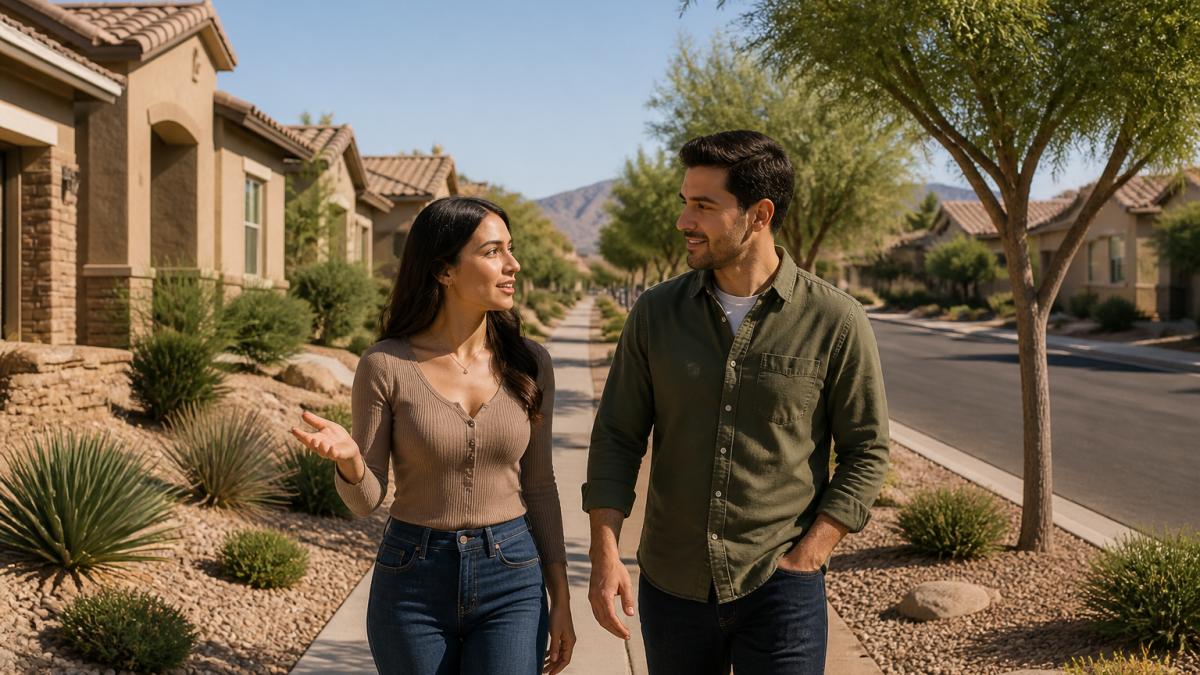
Rather than touring neighborhoods randomly, compare them against the same five criteria. This framework keeps you from falling for a house in an area that doesn't fit your daily life.
The five-criteria neighborhood comparison framework:
- Commute, Drive the route at rush hour, not on a Sunday. The 215 Beltway and I-15 can turn a 15-mile commute into 45 minutes. Check whether your workplace offers alternate schedules.
- Schools, Even without children, school ratings affect resale value. Look up assigned schools through the Clark County School District boundary tool and compare ratings on state accountability reports.
- Amenities, Grocery stores, medical offices, parks, gyms, and dining within a short drive. Master-planned communities often include trails and community centers; older areas may rely on public parks.
- Lifestyle, Walkability, noise, lot sizes, age of neighbors, and HOA rules. A 55-and-older community has different rules than a family-oriented one.
- Price tier and trajectory, Compare price per square foot across areas and review whether values have been rising, flat, or falling over the past 12 months using recent comparable sales.
How the major areas compare on those criteria:
- Downtown and Arts District, Strong walkability and short commutes for downtown workers, with restaurants and galleries nearby. Homes tend to be older, and price per square foot can run high relative to the rest of the valley. HOA fees are often lower or absent, but maintenance on older systems is more likely.
- Summerlin, A master-planned community on the west side with new construction, resort-style amenities, and family-friendly environments. Prices are typically higher, and HOA fees are common. Commutes to the west and northwest employment centers are short; commutes to the east side are longer.
- Henderson, South of Las Vegas and known for good schools, planned communities, and a suburban feel. It also hosts active-adult communities for buyers 55 and older. HOA fees are common in planned villages.
- North Las Vegas, More affordable options, including newer construction and growing neighborhoods. Amenities are still developing in some areas, so verify grocery, medical, and park access for the specific address.
- Centennial and Inspirada, Newer master-planned communities with modern homes and community features. They appeal to buyers prioritizing new construction and planned neighborhoods, with HOA fees that fund shared amenities.
A practical comparison exercise: Build a simple table with the five criteria as columns and your three to five candidate areas as rows.
Visit neighborhoods multiple times before deciding.
Step 5: Evaluate New Construction vs. Resale Homes
Both new construction and resale homes have distinct advantages. Your choice depends on priorities, timeline, and willingness to absorb hidden costs.
New construction homes offer:
- Warranty coverage on systems and structure, often a one-year workmanship warranty plus longer structural coverage
- Modern floor plans and energy-efficient features, including tighter building envelopes and newer HVAC equipment
- Customization options before completion, such as flooring, cabinets, and fixtures
- No surprises from hidden maintenance issues in the first years
- Builder incentives and financing assistance, sometimes including rate buydowns or closing-cost credits
The downside: new construction typically costs more per square foot, you might wait months for completion, and builder neighborhoods are still developing.
Resale homes provide:
- Established neighborhoods with mature landscaping and shade, which matters in desert heat
- Immediate occupancy
- Often lower prices than comparable new construction
- Existing community infrastructure, including parks and schools
- Proven property value trends you can verify with sold data
Resale homes require inspection, and the home's age means systems like the roof or HVAC might need replacement soon.
Total cost of ownership: what to compare
Build a five-year cost estimate for each candidate home covering:
- Property taxes, Clark County assesses property taxes annually; the rate depends on the assessed value and local overlapping districts. Ask the listing agent or county assessor for the prior year's tax bill.
- Homeowners insurance, Premiums vary by roof age, construction type, and claims history. Get a quote before you make an offer, not after.
- HOA fees, Master-planned communities and condominiums typically carry monthly or quarterly HOA dues. Ask for the current budget, reserve study, and any pending special assessments.
- Utilities, Summer cooling drives electricity bills sharply higher. Ask for 12 months of utility bills from the seller or builder; a home with older windows and an aging AC unit can cost meaningfully more to cool.
- Maintenance reserve, Set aside roughly 1% of purchase price annually for repairs and replacements, and more for older homes with original roofs or HVAC systems.
- Pool costs, If the home has a pool, budget for chemicals, equipment repair, and resurfacing over five years.
Desert-climate due diligence
Las Vegas heat stresses homes in ways that other markets do not. Whether you buy new or resale, inspect these items specifically:
- Cooling systems, Confirm the age, SEER rating, and service records of the AC units. A home with two units costs more to replace but cools more evenly.
- Roof condition, Tile roofs are common and durable, but underlayment degrades in intense sun. Ask when the underlayment was last replaced.
- Windows and sun exposure, South- and west-facing windows gain the most heat. Check for dual-pane glass, shade screens, and exterior shading.
- Water use and landscaping, Desert landscaping reduces irrigation demand, but verify the irrigation system's condition and any water-smart rebate programs available through the local water authority.
- Dust and allergen considerations, Sealing and filtration matter in a dusty environment; check the condition of weatherstripping and HVAC filters.
Compare pricing carefully.
Work with a real estate agent who understands both markets.
Step 6: How to Choose a Real Estate Agent in Las Vegas
Your real estate agent is your guide through the entire process. Choosing the right one matters tremendously.
Look for agents with these qualities:
- Local market expertise and recent sales history
- Responsiveness to your calls and messages
- Willingness to listen to your priorities
- Knowledge of neighborhoods you're considering
- Understanding of financing and closing processes
- Transparent communication about market conditions
Interview multiple agents. Ask about experience with first-time buyers, neighborhood knowledge, communication, and for references from recent clients.
Your agent should provide market analysis, explain comparable sales, and advise on offer strategy.
At Reside, LLC, our Realtors take a consultative approach.
Ask potential agents how they stay connected with clients.
Your Complete Las Vegas Home-Buying Guide
Buying a home in Las Vegas follows a logical progression. Here's the complete timeline from decision to closing:
| Stage | Timeline | Key Actions |
|---|---|---|
| Preparation | 2-4 weeks | Assess needs, set budget, get preapproved |
| Research | 2-4 weeks | Study neighborhoods, review comps, create checklist |
| Search | 2-8 weeks | Tour homes, narrow options, identify favorites |
| Offer | 1 week | Make offer, negotiate terms, reach agreement |
| Inspection | 1-2 weeks | Hire inspector, review report, request repairs |
| Appraisal | 1-2 weeks | Lender orders appraisal, reviews property value |
| Closing prep | 1-2 weeks | Final walkthrough, review closing documents |
| Closing | 1 day | Sign documents, transfer funds, receive keys |
The entire process typically takes 30-60 days from offer to closing. Some transactions move faster, others slower depending on inspection findings or financing issues.
Throughout this journey, stay organized: keep all documents in one place, maintain communication with your lender, inspector, and agent, and ask questions when you don't understand something.
You can find dream home Las Vegas by following a structured process. Start by clarifying what you need, secure financing, research neighborhoods thoroughly, and partner with someone who understands the local market.
Frequently Asked Questions
How much house can I afford in Las Vegas?
Most lenders approve mortgages up to 28% of your gross monthly income for housing costs. If you earn $60,000 annually, you can typically afford a home in the $150,000-$200,000 range, depending on down payment, interest rates, and debt. Getting preapproved by a lender gives you a concrete number before you start your home search. A real estate agent can also help you understand total cost of ownership, including property taxes, homeowners insurance, and HOA fees specific to your chosen neighborhood.
What should I look for when touring a home?
Inspect the roof, foundation, HVAC system, and plumbing for signs of wear or damage. Check windows and doors for drafts, test water pressure, and look for water stains indicating past leaks. In the desert climate, verify that the air conditioning unit is in good condition, replacement costs can exceed $5,000. Review the floor plan for functionality, natural light, and storage. Take photos and notes, and ask the seller's agent about recent repairs, age of appliances, and any pending HOA assessments.
How long does it usually take to find and buy a home?
The typical timeline is 30-90 days from offer to closing. Finding the right home can take weeks or months depending on your budget, neighborhood preferences, and market conditions. Once you submit an offer, the lender's appraisal and underwriting typically take 7-14 days. The inspection and title search add another 5-10 days. Working with an experienced real estate agent who knows the local market and has access to MLS listings can provide valuable guidance throughout the process.
Should I buy a new-build or resale home in Las Vegas?
New-construction homes offer modern floor plans, energy-efficient systems, and builder warranties, but typically have higher starting prices and longer wait times. Resale homes are often move-in ready, offer established neighborhoods with known amenities and schools, and may provide better negotiating room. New construction in Henderson and North Las Vegas is growing rapidly, with many active adult communities for buyers 55+. Resale homes give you access to mature communities with established character. Your budget, timeline, and lifestyle preferences should guide this decision.